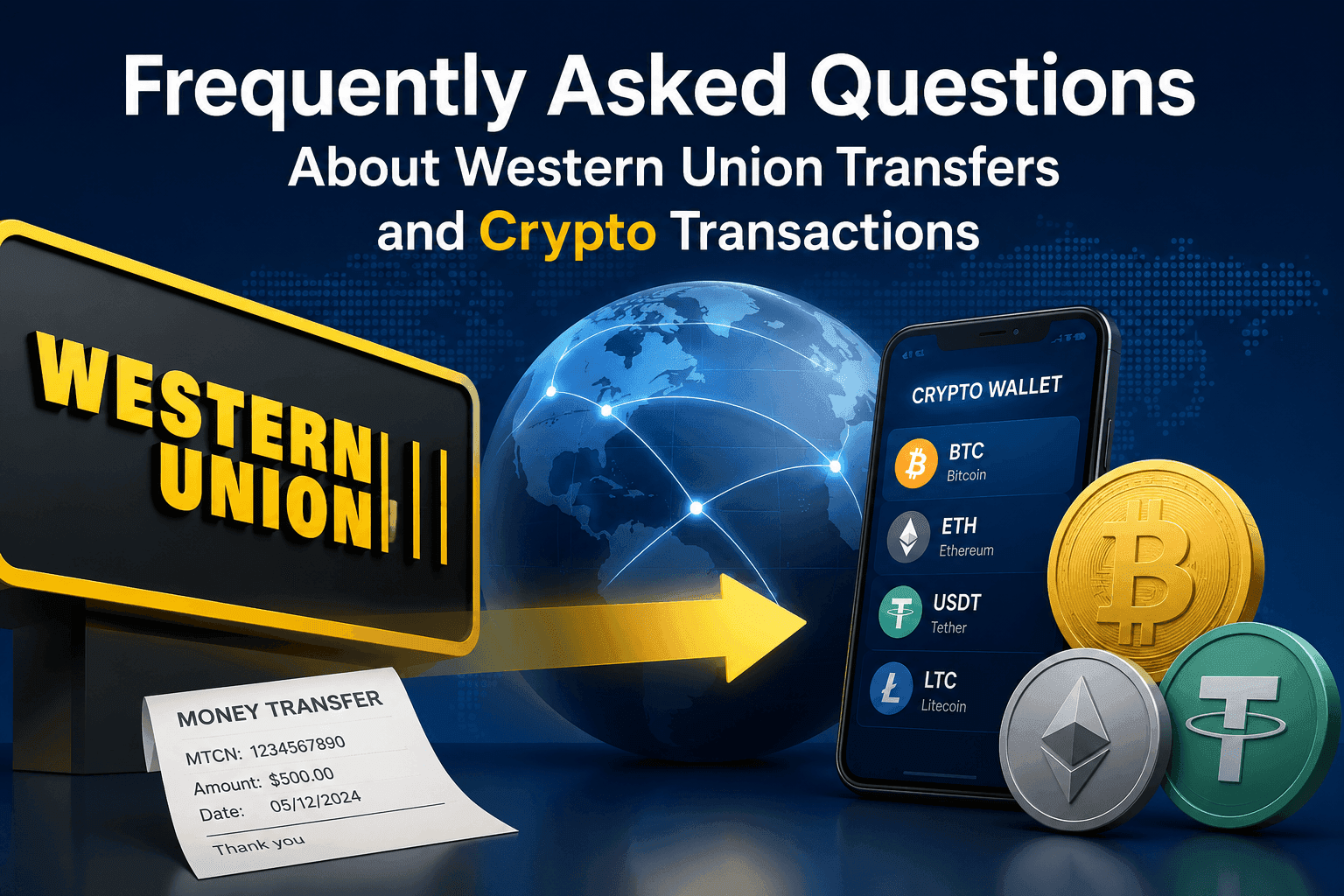
Western Union remains one of the most widely recognized international money transfer services. While it does not directly sell cryptocurrencies, many users utilize Western Union transfers to fund purchases on peer-to-peer marketplaces, brokers, and digital asset platforms.
As cryptocurrency adoption grows, Western Union transfers are increasingly discussed as a payment method for buying digital assets, particularly in regions where traditional banking options may be limited.
Who Is Eligible to Use Western Union for Crypto-Related Transactions?
In most jurisdictions, any individual who can legally send and receive Western Union transfers may potentially use those funds for cryptocurrency purchases through third-party providers.
Eligibility ultimately depends on:
- Local regulations
- Exchange policies
- Identity verification requirements
- Payment restrictions in the user's country
Which Western Union Transfers May Be Used for Cryptocurrency Purchases?
Both domestic and international transfers can potentially be used to fund cryptocurrency purchases, depending on the receiving platform.
Supported use cases often include:
- Peer-to-peer crypto purchases
- Broker deposits
- OTC transactions
- Marketplace payments
Users should always confirm whether the recipient platform accepts Western Union transfers before sending funds.
What Documentation Should I Keep After Sending a Transfer?
Documentation is one of the most important parts of any financial transaction.
You should retain:
- Transfer receipts
- Confirmation numbers
- Transaction references
- Payment confirmations
- Wallet transaction records
- Exchange account statements
Proper records may help verify ownership of funds, support account reviews, and resolve disputes if problems arise.
What If I Do Not Have My Transfer Control Number?
The Money Transfer Control Number (MTCN) is often the fastest way to identify a transfer.
However, if the MTCN is unavailable, supporting information such as:
- Sender name
- Recipient information
- Transfer date
- Amount sent
- Transfer location
may still help locate transaction records.
What If My Transfer Was Sent in a Different Currency?
Cryptocurrency platforms frequently accept payments originating in multiple currencies.
When a transfer is sent in a currency other than U.S. dollars, the amount is generally converted using the applicable exchange rate before the crypto purchase is completed.
The final amount received may be affected by:
- Currency conversion rates
- Transfer fees
- Platform fees
- Market conditions
Why Is Identity Verification Required?
Many financial service providers and cryptocurrency exchanges require identity verification to comply with anti-money laundering (AML) and Know Your Customer (KYC) regulations.
Common verification requirements include:
- Government-issued identification
- Proof of address
- Contact information
- Transaction history in certain cases
Verification helps protect both users and service providers from fraud.
How Much Cryptocurrency Will I Receive?
The amount of cryptocurrency received depends on:
- The amount transferred
- Applicable fees
- Exchange rates
- Market price at the time of purchase
Unlike traditional reimbursement or claim processes, crypto purchases are generally calculated according to the value of the digital asset at execution.
What Happens If There Is a Problem With My Transaction?
If a transfer cannot be verified or a dispute occurs, users may be asked to provide:
- Transaction receipts
- Transfer references
- Account verification documents
- Additional supporting records
Keeping complete documentation significantly improves the likelihood of resolving issues quickly.
Can Someone File a Claim Related to a Fraudulent Crypto Transaction?
If an individual believes they were the victim of fraud involving a money transfer, they should immediately contact the payment provider, the receiving platform, and relevant authorities.
Supporting documentation is often required to review the circumstances surrounding the transaction.
The specific options available will depend on local laws, platform policies, and the status of the transfer.
How Can I Protect Myself From Fraud?
Fraud prevention remains one of the most important considerations when using money transfer services for cryptocurrency purchases.
Recommended precautions include:
- Verify recipient identities.
- Use reputable exchanges.
- Avoid guaranteed-profit schemes.
- Never send funds under pressure.
- Keep copies of all transaction records.
- Confirm wallet addresses carefully.
These steps can help reduce the risk of financial loss and improve transaction security.
Do I Need Professional Assistance to Buy Crypto Using Western Union?
No. Most users can complete the process independently through regulated exchanges and marketplaces.
However, individuals dealing with large transactions, tax reporting obligations, or complex international transfers may choose to seek professional financial or legal advice.
Are There Additional Fees?
Fees may include:
- Western Union transfer fees
- Currency conversion charges
- Exchange deposit fees
- Trading commissions
- Blockchain network fees
The exact amount varies by provider and jurisdiction.
Where Can I Get More Information?
Before sending funds for any cryptocurrency transaction, users should review:
- Platform rules
- Verification requirements
- Transaction limits
- Security recommendations
- Applicable regulations
Understanding both the payment process and the cryptocurrency platform's requirements can help ensure a smoother and safer transaction experience.